
Discover the superior performance and sustainability advantages of detergent packets powered by AquaFilm®.
Detergent packets made with AquaFilm™ are designed to deliver powerful cleaning with less waste, greater precision, and built-in convenience.
AquaFilm® — a water-soluble film made from polyvinyl alcohol (PVA, also known as PVOH).
What science shows
- Detergent grade PVA is designed to dissolve completely in water and biodegrade quickly in wastewater treatment.
- Dissolves into individual polymer chains rather than solid particles
- It is different from persistent plastic materials
- Extensive research shows that PVA detergent packets are not considered a source of solid microplastic particles
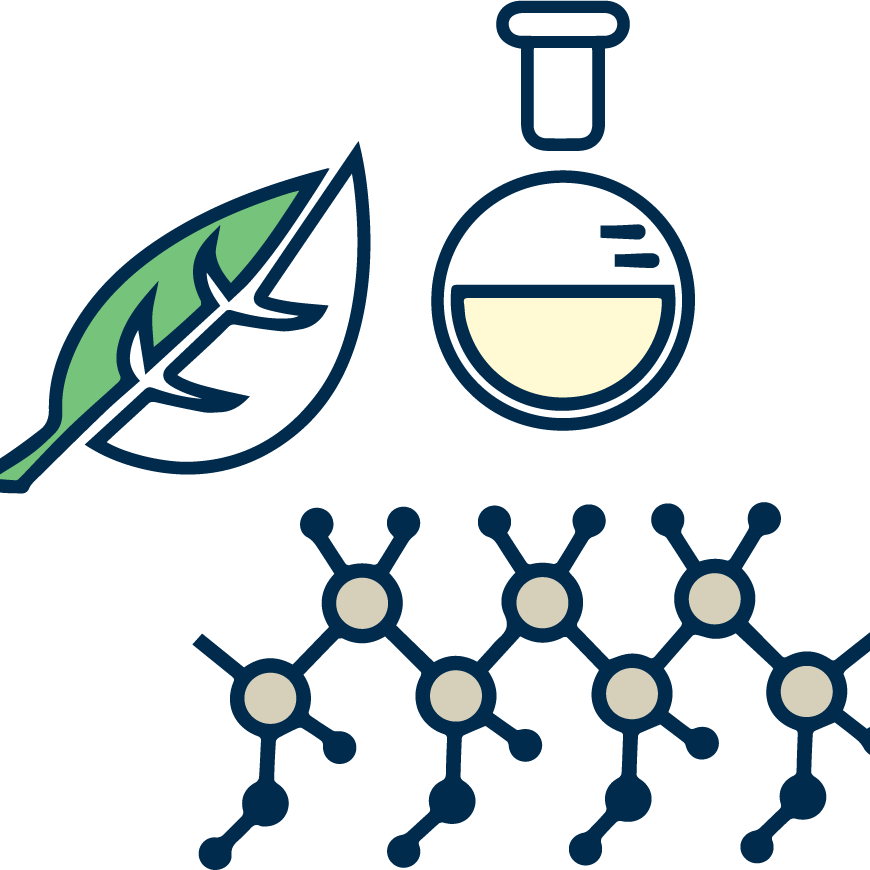
PVA is a water-soluble polymer used to make detergent packets. It is also widely used in many other applications, including medicine, pill coatings, and eye drops. The specific grade of PVA used in detergent packets is specially engineered to remain strong when dry and to rapidly dissolve when exposed to water during the washing cycle.
The American Cleaning Institute debunks common myths about detergents and PVA and provides an accurate, evidence-based fact sheet on the topic.

| Feature / Characteristic | Polyvinyl Alcohol (PVA) Used in Detergent Films | Most Common Microplastics: Polyethylene (PE), Polypropylene (PP), Polystyrene (PS), Polyethylene Terephthalate (PET), Polyamide (PA), Polyvinyl Chloride (PVC), Acrylonitrile Butadiene Styrene (ABS) |
|---|---|---|
| Water Solubility | Detergent-grade PVA has been scientifically confirmed to be: Water-soluble in laundry and dishwashing conditions [1] , [2] Designed in a way to maximize the solubility of the PVA [2] , [3] Water-soluble [2] at levels 50X higher than you would find in a dishwasher or laundry machine, using the international standard for polymer solubility [4] Detergent grade PVA is so soluble that it dissolves down to the individual molecules, which do not and cannot reform into particles. This means there is no solid surface for toxic substances in the water to adsorb onto. [5] , [6] , [7] | Microplastics are insoluble [32] . Even the smallest possible fragments are collections of multiple molecules which do not dissolve. This means they can accumulate in bodies of water. This means they have a solid surface to adsorb and transport other toxic chemicals. [8] , [9] , [10] |
| Biodegradability | Detergent-grade PVA degrades during the normal wastewater treatment process, using universally recognized standard testing methodologies (OECD 301B, 302B). [11] , [12] , [13] It breaks down consistently and reproducibly across a range of laboratory sites, geographical locations, and under a variety of testing conditions, even in river water. [14] | Microplastics are extremely persistent in the environment, with degradation timelines ranging from decades to centuries, depending on conditions. [10] |
| Presence in Water Bodies | Zero evidence of detergent-grade PVA has been found in the aquatic environment, including zero presence found in drinking water. [15] | Microplastics have been detected in oceans, rivers, lakes, fish, birds, plankton, and remote areas, and in drinking water. [10] , [15] , [16] , [17] , [18] |
| Accumulation in Living Species | It is not considered a risk, as it does not accumulate. Detergent-grade PVA has never been found in the human body. [19] , [20] , [21] , [30] , [31] | Microplastics will accumulate due to their solubility in cells’ fat structures and have been found in most parts of the human body. [10] , [21] |
| Presence in the Home Environment | Detergent-grade PVA has never been found in the home environment, even in dishwasher and washing machine use or homes. [1] , [22] , [23] , [24] , [25] , [26] | Microplastics have been found in numerous household products as solid particles. [1] , [22] , [23] , [24] , [25] , [26] |
| Toxicity | The environmental safety and human safety of detergent-grade PVA has been confirmed by the EPA, FDA, and other agencies around the world – and it is approved for use in things like detergent pods, eye drops, and the coating of medications. [19] , [20] , [21] , [27] , [28] , [29] , [30] , [31] | Microplastics can be harmful to marine life and pose a physical hazard to animals. They can also absorb pollutants due to their solid surface. [7] , [8] |
| Generally Recognized as a Microplastic | No, detergent-grade PVA is not generally recognized by the scientific community as a microplastic. [10] , [32] , [33] | Yes, all these materials fit the generally accepted definition and categorization of a microplastic. [10] , [32] |
Sources
- Lack of Evidence for Microplastic Contamination from Water-Soluble Detergent Capsules
- EPA: Denial of Requested Rulemaking (Section IV, C.1)
- Some Properties of PVA and their Possible Applications
- OECD: Solution/Extraction Behaviour of Polymers in Water
- Defining the Conformation of Water-Soluble Poly(vinyl alcohol) in Solution: A SAXS, DLS, and AFM Study
- Bound water governs the single-chain property of Poly(vinyl alcohol) in aqueous environments
- Characterization of Partially Hydrolyzed Poly(vinyl alcohol). Effect of Poly(vinyl alcohol) Molecular Architecture on Aqueous Phase Conformation
- Microplastics as carriers of toxic pollutants: Source, transport, and toxicological effects
- Sorption Behavior and Mechanisms of Organic Contaminants to Nano and Microplastics
- Twenty years of microplastic pollution research—what have we learned?
- Water soluble polymer biodegradation evaluation using standard and experimental methods
- Application of standardized methods to evaluate the environmental safety of polyvinyl alcohol disposed of down the drain
- Biodegradability of Polyvinyl Alcohol Based Film Used for Liquid Detergent Capsules
- Multi-laboratory evaluation of the reproducibility of polymer biodegradation assessments applying standardized and modified respirometry methods
- Analytical methods to measure microplastics in drinking water
- Plastic Debris in 29 Great Lakes Tributaries: Relations to Watershed Attributes and Hydrology
- Chemical composition of microplastics floating on the surface of the Mediterranean Sea
- From the Caribbean to the Arctic, the most abundant microplastic particles in the ocean have escaped detection
- Review of the oral toxicity of polyvinyl alcohol (PVA)
- EFSA: Opinion of the Scientific Panel on food additives, flavourings, processing aids and materials in contact with food (AFC) related to the use of polyvinyl alcohol as a coating agent for food supplements
- EPA: Denial of Requested Rulemaking (Section V, B.2)
- Contribution of household dishwashing to microplastic pollution
- A systematic review of microplastics emissions in kitchens: Understanding the links with diseases in daily life
- Release of Micro- and Nanosized Particles from Plastic Articles during Mechanical Dishwashing
- Release of primary microplastics from consumer products to wastewater in the Netherlands
- Human exposure to PM10 microplastics in indoor air
- Assessment of Toxicity and Biodegradability of Poly(vinyl alcohol)-Based Materials in Marine Water
- International Journal of Toxicology: Final Report On the Safety Assessment of Polyvinyl Alcohol
- EPA: Denial of Requested Rulemaking (Section V, B.4a and 4b)
- MSU CRIS: Trending – Polyvinyl Alcohol
- MSU CRIS: In the news – Polyvinyl Alcohol
- Are We Speaking the Same Language? Recommendations for a Definition and Categorization Framework for Plastic Debris
- EPA: Denial of Requested Rulemaking (Section V, B.2 and Section V, B.3)